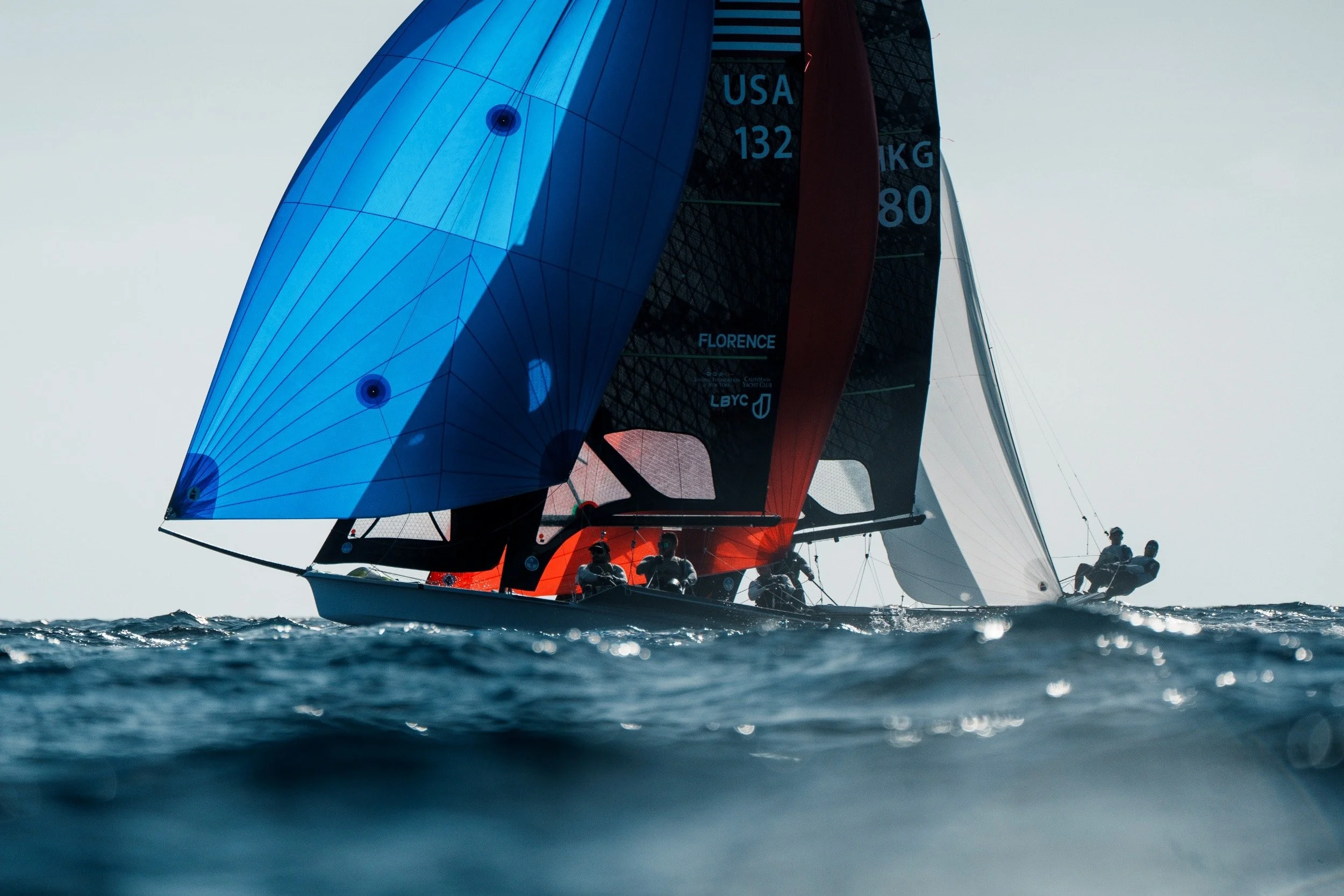
Five Speed Lessons from a Year of Testing in the 49er
After a full year dedicated to speed development in the 49er, we sat down to distill everything we learned into lessons that could help any sailor get faster. What started as dozens of testing sessions, hundreds of tuning adjustments, and countless hours on the water boiled down to five core principles—principles that apply whether you're sailing a 49er, a Laser, or a J/70.
The Problem We Were Trying to Solve
Speed in sailing isn't just about having the right gear or knowing the "fast" settings. It's about understanding why certain things work and developing the feel to make adjustments in real-time. As we learned by testing settings at their extremes, we wanted to move beyond chasing numbers on a tuning guide and build a deeper understanding of what makes a boat go fast.
What We Learned: Five Lessons from the Year of Speed
1. Keep Every Control in Range
This was our number one takeaway. As Grant put it:
"Having all of your settings in a position so that when the conditions change up or down, you're covered, and you can move them a little bit."
This applies most critically to dynamic controls—the ones you can adjust while racing. If you're maxed out on vang or cunningham before conditions have even built, you've got nowhere to go when it pipes up. The same goes for being too loose when it's about to drop. Your static settings (rig tension, spreader angle) matter less in the moment, but your dynamic controls need room to breathe.
2. Technique Is More Important Than Setup
This might sound counterintuitive after spending a year obsessing over settings, but it's true.
"If you're really looking for the meat and potatoes... most of that is going to be in how you sail the boat—how you're trimming, how you're steering, how's the weight movement look, how are you responding to changes in conditions, puffs and lulls, sea state."
Here's the key insight: setup augments good technique. Good sailors can sail well on bad setups, but they become unstoppable when the setup is dialed. The right setup frees up mental bandwidth so you can focus on racing instead of fighting the boat.
3. Hydro Is More Important Than Aero
We spent a lot of time worrying about what things looked like above the water—sail shape, twist, draft position. But the real gains came when we shifted focus to what was happening below the surface.
"I don't really care what the setup looks like above water, so long as what's going on below water is working well."
The practical application: keep your helm load in range, and steer less. If the boat feels balanced and you're not sawing at the tiller, you're probably in a good spot.
4. Understand How Helm Load Changes with Wind
This was a breakthrough for us. Helm load isn't static—it follows a predictable pattern through the wind range:
- Light air to full power (0-9 knots in a 49er): Helm load increases as you hold power with tight leeches and mainsheet
- Full power and beyond (9+ knots): Helm load decreases as you ease mainsheet and drive forward
- Overpowered conditions (13-14+ knots): You're always trying to keep it light and balanced
As Grant explained:
"If you're following that philosophy in any condition and in any boat, then it's likely that you're going to be going fairly well."
5. Test Every Control Through Its Full Range
This might be the most actionable lesson. We took every control on the boat—all twelve or so of them—and tested each one through its entire range, from absurdly tight to absurdly loose.
"I would go up 1, up 2, up 3, up 4, up 5, up 6, which is kind of an absurd amount in the 49er, just to get all the way to where I really feel the difference in sensation that control is doing to the boat."
One day we sailed with the lowers completely slack in full power conditions—about 20 turns off base. Ridiculous? Yes. But it helped us understand exactly what the lowers feel like when they're too loose, so we can recognize that sensation in race conditions and know exactly what to adjust.
How to Apply It
Here's what you can take to your next practice session:
- Audit your dynamic controls: Before your next race, check that your vang, cunningham, and outhaul have room to move both up and down from your starting position
- Film your technique: Before chasing setup changes, make sure your fundamentals are solid. Setup gains mean nothing if your trim timing or weight placement is off
- Feel your helm: Spend a session just paying attention to tiller pressure. Is it getting heavier as the breeze builds? Lighter once you're overpowered? Use that feedback to evaluate your setup
- Go to extremes: Pick one control per practice session and test it way outside the normal range. You're not trying to find a fast setting—you're building your library of sensations so you can diagnose problems on race day
- Steer less: If you find yourself making constant corrections, something in your setup is probably off. A well-balanced boat should track with minimal input
The Bigger Picture
Speed development isn't about finding the magic numbers. It's about building feel, understanding cause and effect, and developing the confidence to make adjustments on the fly. The boats that pass you on the racecourse aren't always sailing with a secret setup—they're often just better at recognizing what their boat needs in the moment and responding faster.
That recognition comes from putting in the testing hours, going to extremes, and building a vocabulary of sensations. It's not glamorous work, but it is the foundation for turning speed into race performance.
After a full year dedicated to speed development in the 49er, we sat down to distill everything we learned into lessons that could help any sailor get faster. What started as dozens of testing sessions, hundreds of tuning adjustments, and countless hours on the water boiled down to five core principles—principles that apply whether you're sailing a 49er, a Laser, or a J/70.
The Problem We Were Trying to Solve
Speed in sailing isn't just about having the right gear or knowing the "fast" settings. It's about understanding why certain things work and developing the feel to make adjustments in real-time. As we learned by testing settings at their extremes, we wanted to move beyond chasing numbers on a tuning guide and build a deeper understanding of what makes a boat go fast.
What We Learned: Five Lessons from the Year of Speed
1. Keep Every Control in Range
This was our number one takeaway. As Grant put it:
"Having all of your settings in a position so that when the conditions change up or down, you're covered, and you can move them a little bit."
This applies most critically to dynamic controls—the ones you can adjust while racing. If you're maxed out on vang or cunningham before conditions have even built, you've got nowhere to go when it pipes up. The same goes for being too loose when it's about to drop. Your static settings (rig tension, spreader angle) matter less in the moment, but your dynamic controls need room to breathe.
2. Technique Is More Important Than Setup
This might sound counterintuitive after spending a year obsessing over settings, but it's true.
"If you're really looking for the meat and potatoes... most of that is going to be in how you sail the boat—how you're trimming, how you're steering, how's the weight movement look, how are you responding to changes in conditions, puffs and lulls, sea state."
Here's the key insight: setup augments good technique. Good sailors can sail well on bad setups, but they become unstoppable when the setup is dialed. The right setup frees up mental bandwidth so you can focus on racing instead of fighting the boat.
3. Hydro Is More Important Than Aero
We spent a lot of time worrying about what things looked like above the water—sail shape, twist, draft position. But the real gains came when we shifted focus to what was happening below the surface.
"I don't really care what the setup looks like above water, so long as what's going on below water is working well."
The practical application: keep your helm load in range, and steer less. If the boat feels balanced and you're not sawing at the tiller, you're probably in a good spot.
4. Understand How Helm Load Changes with Wind
This was a breakthrough for us. Helm load isn't static—it follows a predictable pattern through the wind range:
- Light air to full power (0-9 knots in a 49er): Helm load increases as you hold power with tight leeches and mainsheet
- Full power and beyond (9+ knots): Helm load decreases as you ease mainsheet and drive forward
- Overpowered conditions (13-14+ knots): You're always trying to keep it light and balanced
As Grant explained:
"If you're following that philosophy in any condition and in any boat, then it's likely that you're going to be going fairly well."
5. Test Every Control Through Its Full Range
This might be the most actionable lesson. We took every control on the boat—all twelve or so of them—and tested each one through its entire range, from absurdly tight to absurdly loose.
"I would go up 1, up 2, up 3, up 4, up 5, up 6, which is kind of an absurd amount in the 49er, just to get all the way to where I really feel the difference in sensation that control is doing to the boat."
One day we sailed with the lowers completely slack in full power conditions—about 20 turns off base. Ridiculous? Yes. But it helped us understand exactly what the lowers feel like when they're too loose, so we can recognize that sensation in race conditions and know exactly what to adjust.
How to Apply It
Here's what you can take to your next practice session:
- Audit your dynamic controls: Before your next race, check that your vang, cunningham, and outhaul have room to move both up and down from your starting position
- Film your technique: Before chasing setup changes, make sure your fundamentals are solid. Setup gains mean nothing if your trim timing or weight placement is off
- Feel your helm: Spend a session just paying attention to tiller pressure. Is it getting heavier as the breeze builds? Lighter once you're overpowered? Use that feedback to evaluate your setup
- Go to extremes: Pick one control per practice session and test it way outside the normal range. You're not trying to find a fast setting—you're building your library of sensations so you can diagnose problems on race day
- Steer less: If you find yourself making constant corrections, something in your setup is probably off. A well-balanced boat should track with minimal input
The Bigger Picture
Speed development isn't about finding the magic numbers. It's about building feel, understanding cause and effect, and developing the confidence to make adjustments on the fly. The boats that pass you on the racecourse aren't always sailing with a secret setup—they're often just better at recognizing what their boat needs in the moment and responding faster.
That recognition comes from putting in the testing hours, going to extremes, and building a vocabulary of sensations. It's not glamorous work, but it is the foundation for turning speed into race performance.