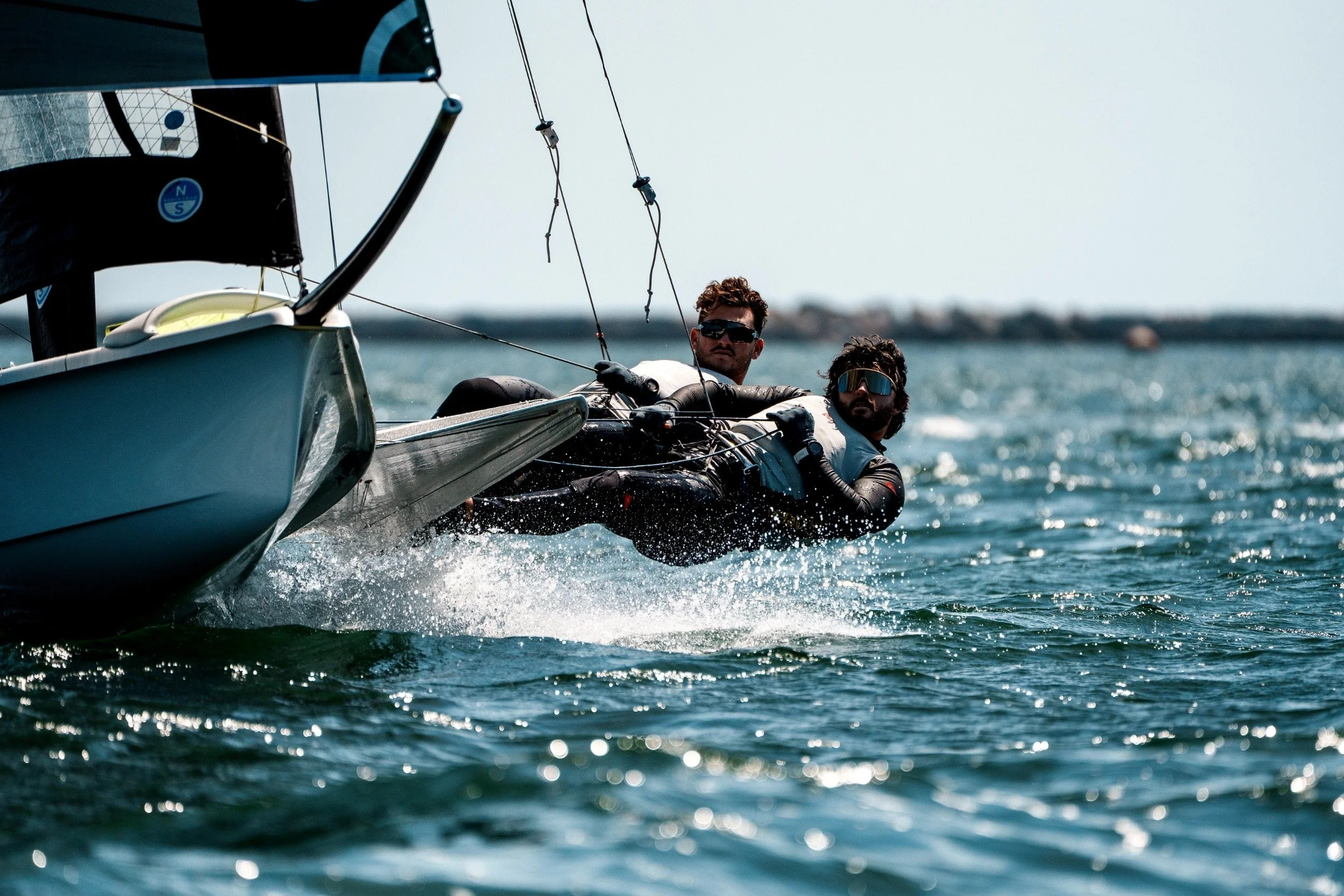
There's something special about getting thrown into the fire with sailors who are faster than you. It's uncomfortable, humbling, and exactly what we need to become one of the fastest ourselves.
At the beginning of the month, we hosted Kuba and Mikolaj—the Polish 49er team fresh off a 7th place finish at the World Championships—for seven straight days of intense training on San Pedro's Olympic waters. These guys had a 1-2-1 on the windiest days at Worlds, and we were determined to learn everything we could from them.
The venue holds special meaning for us. Grant started sailing these waters at eight years old, racing Optimists at local regattas. Now we're preparing for the 2028 Olympics on the same course. The flat water inside the breakwall, the geographical features that favor the right side when the breeze builds, the more unpredictable conditions outside—it all felt familiar, but we're seeing it with new eyes.
We towed up from Long Beach to Cabrillo every day, spending hours doing lineups on both the inside and outside courses, then finishing with racing to test split tacks and course strategy. The long downwind sail back to Long Beach became our time to decompress and process everything we'd learned.
Here's what surprised us most: Kuba shared how he and Mikolaj got fast in the first place. During COVID, they found themselves stuck training with teams better than them. They were thrown into the fire and forced to absorb as much as they could. Sound familiar?
Since they were sailing our equipment—not their personal gear—Kuba and Mikolaj had to adapt their technique and rig setup to find the feelings they wanted. Watching them dial in unfamiliar boats reminded us of something important: the meat and potatoes of boat speed comes from how you set up and sail the boat, not just the equipment details.
We spent time testing forestay lengths and mast compression, swapping between our two boats, and even switching teammates. Every session brought new insights. By the end of the week we felt quite strong in a range of conditions. In July the rest of the international fleet will begin arriving in Long Beach for a first look at the Olympic venue, and we're excited to line up with them with the new tools we've developed!
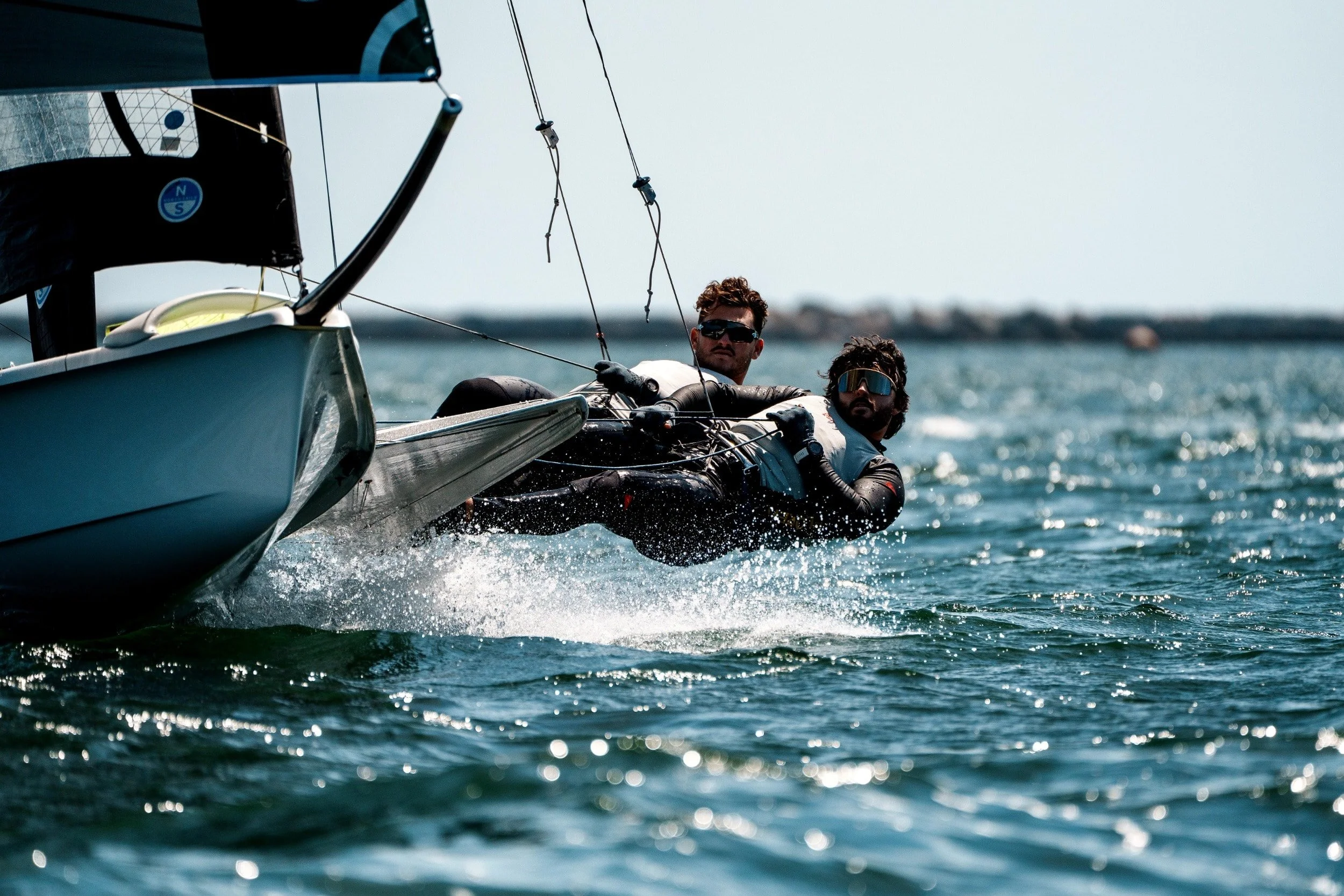
There's something special about getting thrown into the fire with sailors who are faster than you. It's uncomfortable, humbling, and exactly what we need to become one of the fastest ourselves.
At the beginning of the month, we hosted Kuba and Mikolaj—the Polish 49er team fresh off a 7th place finish at the World Championships—for seven straight days of intense training on San Pedro's Olympic waters. These guys had a 1-2-1 on the windiest days at Worlds, and we were determined to learn everything we could from them.
The venue holds special meaning for us. Grant started sailing these waters at eight years old, racing Optimists at local regattas. Now we're preparing for the 2028 Olympics on the same course. The flat water inside the breakwall, the geographical features that favor the right side when the breeze builds, the more unpredictable conditions outside—it all felt familiar, but we're seeing it with new eyes.
We towed up from Long Beach to Cabrillo every day, spending hours doing lineups on both the inside and outside courses, then finishing with racing to test split tacks and course strategy. The long downwind sail back to Long Beach became our time to decompress and process everything we'd learned.
Here's what surprised us most: Kuba shared how he and Mikolaj got fast in the first place. During COVID, they found themselves stuck training with teams better than them. They were thrown into the fire and forced to absorb as much as they could. Sound familiar?
Since they were sailing our equipment—not their personal gear—Kuba and Mikolaj had to adapt their technique and rig setup to find the feelings they wanted. Watching them dial in unfamiliar boats reminded us of something important: the meat and potatoes of boat speed comes from how you set up and sail the boat, not just the equipment details.
We spent time testing forestay lengths and mast compression, swapping between our two boats, and even switching teammates. Every session brought new insights. By the end of the week we felt quite strong in a range of conditions. In July the rest of the international fleet will begin arriving in Long Beach for a first look at the Olympic venue, and we're excited to line up with them with the new tools we've developed!