We Have the Weapons. Now The Focus Turns To Racing.
The San Pedro Olympic Classes Regatta was the final test of our Year of Speed.
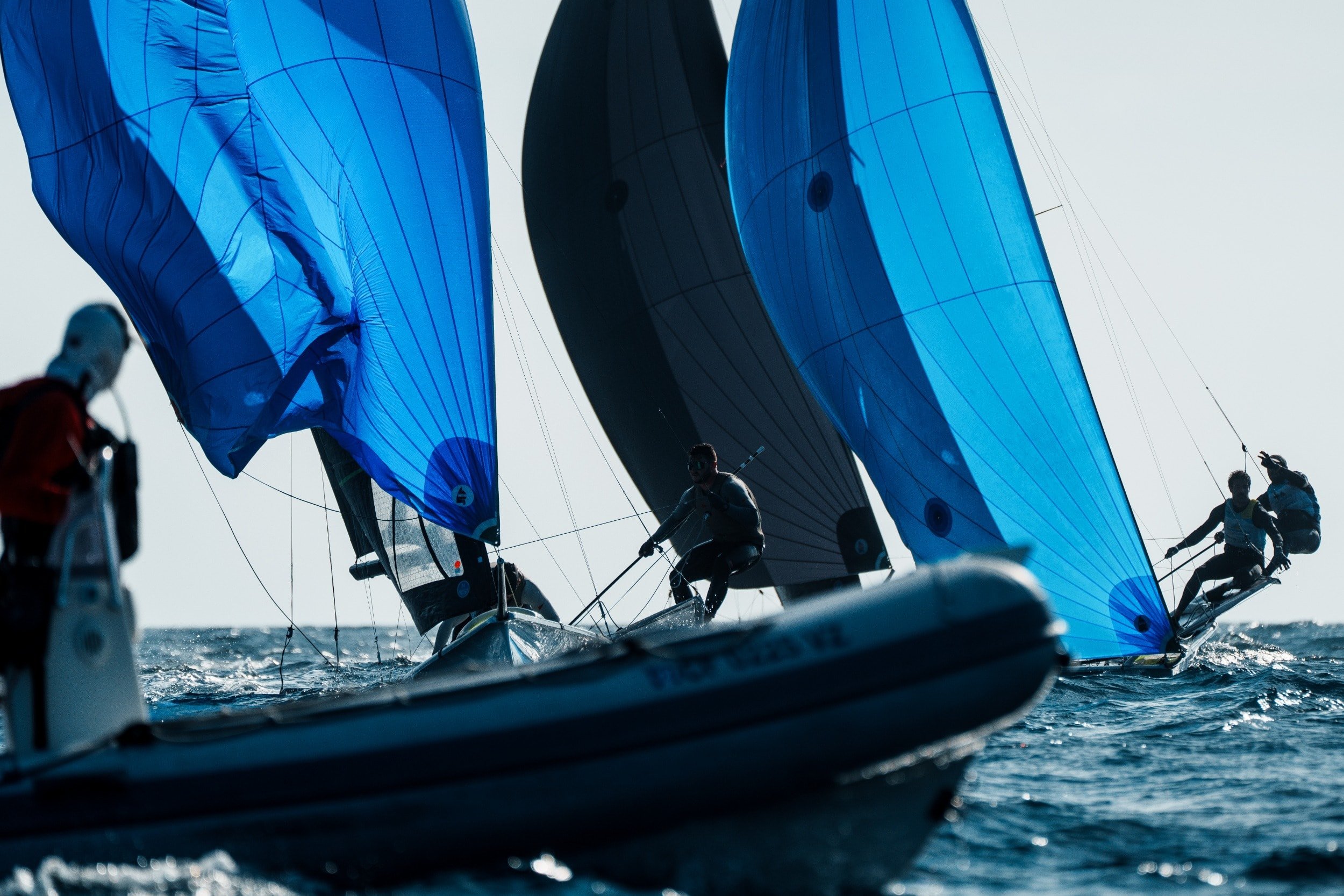
From August 3–8, we raced an international 49er fleet on the waters that will host the Los Angeles 2028 Olympic sailing competition. It was the fifth and final stop of the 2026 Sailing Grand Slam, and the first Olympic-class regatta held at the Port of Los Angeles. For us, it was also an opportunity to answer the question behind the last year of work: after all the testing, lineups, setup changes, and technique development, are we actually fast enough?
As we explained in our video recap, we left San Pedro with a clear answer. We are fast in a wide range of conditions. When we can sail in our mode, the feeling inside the boat now matches what happens against the fleet.
“When we feel good, the boat is actually sailing pretty close to as fast as anybody else out there.”
That was the biggest takeaway from the regatta. It was also a reminder that having speed and using it to race are two different skills.
Our Final Check Against the International Fleet
We came into San Pedro knowing the fleet would be deep. The regatta brought many of the teams we will need to race over the next two years onto our home Olympic waters. There were no easy lanes and very few easy points. Every start, first beat, and mark rounding gave us a direct comparison with teams that have spent years racing at this level.
The conditions gave us a useful range for that comparison. The week included the stronger sea-breeze conditions we know well in San Pedro, along with lighter and less predictable racing that forced the fleet to change modes and adapt quickly. That variety mattered because our goal was not to prove that we could be fast in one narrow condition. We wanted to see whether the speed work had created a platform we could trust across the range.
At our best, it had.
The official results show that we posted a sixth and another top-10 race against the international fleet. More importantly, we had moments when we could feel the boat release, sail the mode we wanted, and stay connected to teams we have spent the year measuring ourselves against.
Those moments were confidence-inspiring. They showed that we have gathered more of the pieces. Boat handling is becoming dependable. Our speed is becoming competitive. The sensations we have built through hundreds of lineups now mean something when the racecourse is crowded and the points count.
Why the Racing Still Felt So Hard
Knowing that an international fleet will be difficult is different from feeling it in the moment.
There were races when we felt fast and expected to pick off the boat ahead. In training, a small speed advantage can eventually create a pass. At San Pedro, the teams around us were too complete to give those places away. They protected their lanes, changed modes at the right time, and made fewer mistakes through the transitions.
“You get in the moment and you’re like, ‘I can pick them off.’ We couldn’t pick them off.”
That was frustrating, but it was also exactly the information we came to San Pedro to collect.
The regatta showed us that speed is no longer the only limiting factor. We now need to use that speed more effectively: start in a position where we can express it, recognize the racecourse earlier and protect the right mode, anticipate what the boats around us will do, and connect one strong decision to the next.
Everything was going according to the plan. It was just hard to feel that while we were inside a race and wanted more.
We Raced Like Bank Robbers
Our mantra for the week was that we were bank robbers.
The teams around us have more experience at the front of the international fleet. At this stage of our campaign, they should beat us. Every place we took from them was something we had to steal through a good start, a strong mode, a better decision, or a clean maneuver.
“At any point we got on these guys, we were stealing from them, because they should be beating us.”
That mindset helped us measure the week honestly. A sixth and another top 10 did not turn the regatta into a finished product, but those races showed what is possible when we put enough pieces together. We stole points from good teams, and we learned how difficult it is to keep stealing them for an entire series.
The next step is to make those races less exceptional.
What the Year of Speed Gave Us
Year 1 of our campaign was about boat handling. We needed to learn how to move through the boat, complete maneuvers reliably, communicate through the transitions, and keep the platform underneath us.
Year 2 was our Year of Speed. We spent long blocks testing against strong training partners, deliberately changing settings, losing lineups, reviewing video, and building a better understanding of how to sail the 49er across different wind strengths and sea states. The goal was not to find one magic setup. It was to develop the tools and the feel to keep the boat in range as the conditions changed.
San Pedro showed us what that year produced.
We now trust our sensation when the boat feels right. We know that our best mode can be competitive with the international fleet. We have more confidence in our boat handling and a wider range of speed tools. Instead of wondering whether the boat can go fast enough, we can begin asking a more advanced question: how do we create the moments that let us use that speed?
That shift is important. It means the speed work was not an end point. It gave us the weapons for the next phase.
Where We Go From Here
Year 3 is about racing.
We need more starts under pressure, more first beats in traffic, more mark roundings with boats on both sides, and more opportunities to make decisions when there is no time to stop and think. The correct reactions only become automatic through repetition.
With only eight 49er regattas on the class calendar each year, we will build some of that repetition in other classes. That does not replace the Olympic campaign. It allows us to collect more racecourse reps, work inside strong teams, learn different roles, and practice the same core skills in new environments.
We will keep developing speed. Olympic campaigns never finish one phase and leave it behind completely. But the emphasis is changing. We have the boat handling. We have speed that can compete. Now we need to become better racers and learn how to put those tools together for an entire series.
The light at the end of the tunnel is still far away, but San Pedro made it easier to see.
We finished the Year of Speed knowing we have weapons. Year 3 is about learning when and how to use them.
The San Pedro Olympic Classes Regatta was the final test of our Year of Speed.
From August 3–8, we raced an international 49er fleet on the waters that will host the Los Angeles 2028 Olympic sailing competition. It was the fifth and final stop of the 2026 Sailing Grand Slam, and the first Olympic-class regatta held at the Port of Los Angeles. For us, it was also an opportunity to answer the question behind the last year of work: after all the testing, lineups, setup changes, and technique development, are we actually fast enough?
As we explained in our video recap, we left San Pedro with a clear answer. We are fast in a wide range of conditions. When we can sail in our mode, the feeling inside the boat now matches what happens against the fleet.
“When we feel good, the boat is actually sailing pretty close to as fast as anybody else out there.”
That was the biggest takeaway from the regatta. It was also a reminder that having speed and using it to race are two different skills.
Our Final Check Against the International Fleet
We came into San Pedro knowing the fleet would be deep. The regatta brought many of the teams we will need to race over the next two years onto our home Olympic waters. There were no easy lanes and very few easy points. Every start, first beat, and mark rounding gave us a direct comparison with teams that have spent years racing at this level.
The conditions gave us a useful range for that comparison. The week included the stronger sea-breeze conditions we know well in San Pedro, along with lighter and less predictable racing that forced the fleet to change modes and adapt quickly. That variety mattered because our goal was not to prove that we could be fast in one narrow condition. We wanted to see whether the speed work had created a platform we could trust across the range.
At our best, it had.
The official results show that we posted a sixth and another top-10 race against the international fleet. More importantly, we had moments when we could feel the boat release, sail the mode we wanted, and stay connected to teams we have spent the year measuring ourselves against.
Those moments were confidence-inspiring. They showed that we have gathered more of the pieces. Boat handling is becoming dependable. Our speed is becoming competitive. The sensations we have built through hundreds of lineups now mean something when the racecourse is crowded and the points count.
Why the Racing Still Felt So Hard
Knowing that an international fleet will be difficult is different from feeling it in the moment.
There were races when we felt fast and expected to pick off the boat ahead. In training, a small speed advantage can eventually create a pass. At San Pedro, the teams around us were too complete to give those places away. They protected their lanes, changed modes at the right time, and made fewer mistakes through the transitions.
“You get in the moment and you’re like, ‘I can pick them off.’ We couldn’t pick them off.”
That was frustrating, but it was also exactly the information we came to San Pedro to collect.
The regatta showed us that speed is no longer the only limiting factor. We now need to use that speed more effectively: start in a position where we can express it, recognize the racecourse earlier and protect the right mode, anticipate what the boats around us will do, and connect one strong decision to the next.
Everything was going according to the plan. It was just hard to feel that while we were inside a race and wanted more.
We Raced Like Bank Robbers
Our mantra for the week was that we were bank robbers.
The teams around us have more experience at the front of the international fleet. At this stage of our campaign, they should beat us. Every place we took from them was something we had to steal through a good start, a strong mode, a better decision, or a clean maneuver.
“At any point we got on these guys, we were stealing from them, because they should be beating us.”
That mindset helped us measure the week honestly. A sixth and another top 10 did not turn the regatta into a finished product, but those races showed what is possible when we put enough pieces together. We stole points from good teams, and we learned how difficult it is to keep stealing them for an entire series.
The next step is to make those races less exceptional.
What the Year of Speed Gave Us
Year 1 of our campaign was about boat handling. We needed to learn how to move through the boat, complete maneuvers reliably, communicate through the transitions, and keep the platform underneath us.
Year 2 was our Year of Speed. We spent long blocks testing against strong training partners, deliberately changing settings, losing lineups, reviewing video, and building a better understanding of how to sail the 49er across different wind strengths and sea states. The goal was not to find one magic setup. It was to develop the tools and the feel to keep the boat in range as the conditions changed.
San Pedro showed us what that year produced.
We now trust our sensation when the boat feels right. We know that our best mode can be competitive with the international fleet. We have more confidence in our boat handling and a wider range of speed tools. Instead of wondering whether the boat can go fast enough, we can begin asking a more advanced question: how do we create the moments that let us use that speed?
That shift is important. It means the speed work was not an end point. It gave us the weapons for the next phase.
Where We Go From Here
Year 3 is about racing.
We need more starts under pressure, more first beats in traffic, more mark roundings with boats on both sides, and more opportunities to make decisions when there is no time to stop and think. The correct reactions only become automatic through repetition.
With only eight 49er regattas on the class calendar each year, we will build some of that repetition in other classes. That does not replace the Olympic campaign. It allows us to collect more racecourse reps, work inside strong teams, learn different roles, and practice the same core skills in new environments.
We will keep developing speed. Olympic campaigns never finish one phase and leave it behind completely. But the emphasis is changing. We have the boat handling. We have speed that can compete. Now we need to become better racers and learn how to put those tools together for an entire series.
The light at the end of the tunnel is still far away, but San Pedro made it easier to see.
We finished the Year of Speed knowing we have weapons. Year 3 is about learning when and how to use them.