What the 505 Exposed in Our Racing
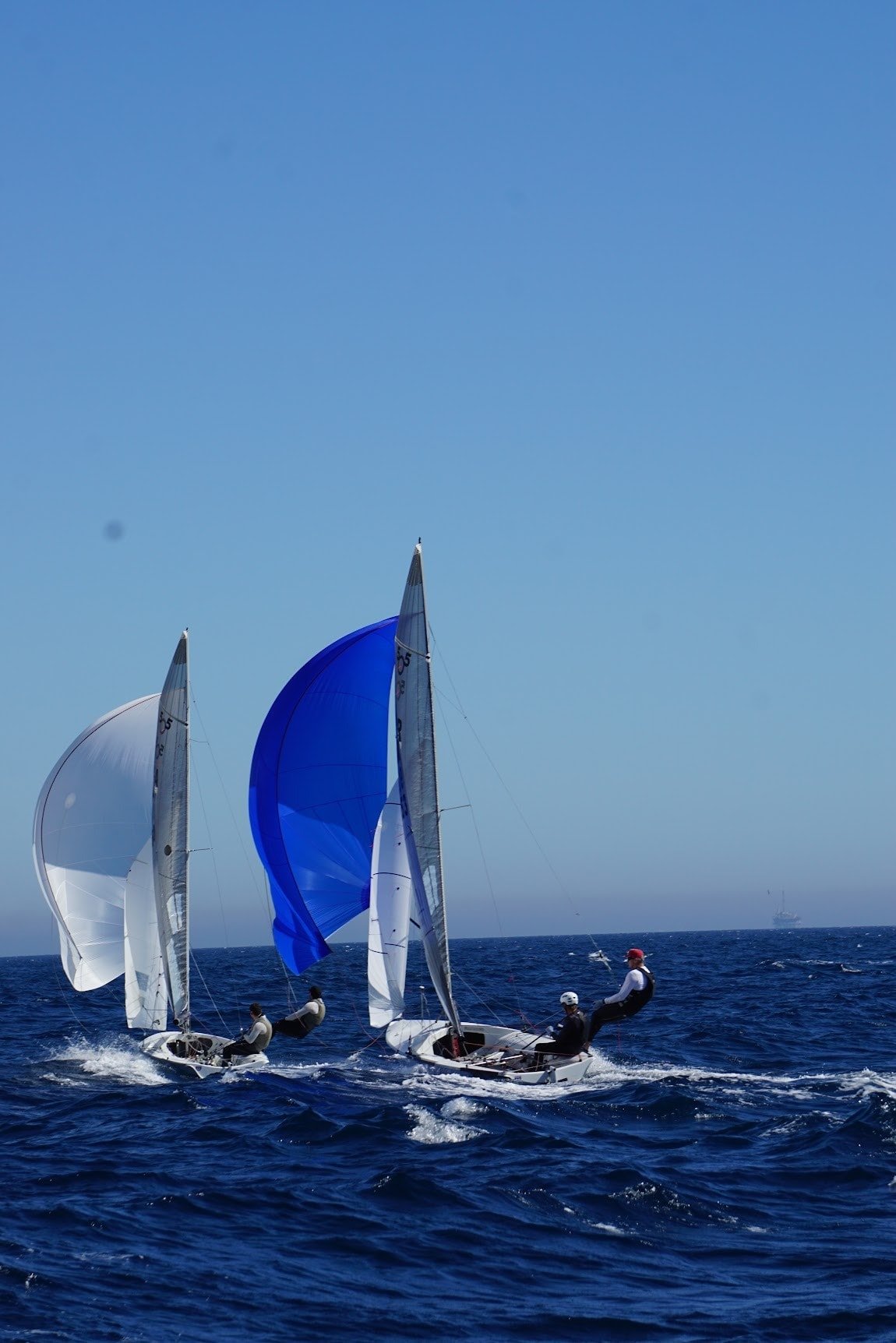
The 505 Pacific Coast Championship in San Francisco was a difficult regatta for us. After winning the Melges 24 Worlds, and Jordan winning the IC37 North Americans, we were back in a boat we hadn't spent much time in for nearly two years. We struggled with the setup, our division of responsibilities, and some tactical decisions. The results reflected that.
It was frustrating, but it also showed us why we put the 5o5 into this year's program. It asks us to work on parts of our sailing that don't get the same attention in our usual roles.
Working from the Other Person's Perspective
In the 49er, Grant is closely involved in boat speed and main trim, while Jordan can spend more attention on tactics. The 5o5 changes that balance. Jordan has the controls in the boat and is often occupied keeping it fast. Grant has a better view of the course from the wire, but less access to those controls.
That puts more responsibility on Grant to describe what is happening outside the boat. It also asks Jordan to manage speed while relying on someone else for the tactical picture. We weren't consistently getting that exchange right. Jordan was often overloaded, and Grant wasn't yet giving him the same picture Jordan normally provides.
The value is in understanding what the other person needs. When we're back in our normal positions on the 49er, we can use that experience to make our communication more useful.
Learning the Equipment Again
We had some experience to draw on. In 2024, we trained with Howie Hamlin's, Team Tuesdays and sailed one of his boats to fifth overall and top youth team at the North Americans. But we hadn't done much 505 sailing since then.
This time, we sailed different boats in Long Beach and San Francisco and tried several sets of sails. The control layouts and setups varied between boats. Sometimes even finding the right control took attention away from sailing.
With so many variables changing, it was hard to isolate the effect of any one sail or setting. We had to go back to how the boat felt: the sheeting range, how much adjustment was needed, and whether the setup was working with the steering. That is familiar work from the 49er, even if the controls are different.
The practical takeaway is to spend time with the equipment we'll actually race. A setting from another boat is a starting point, not proof that the new setup is right.
Reassessing Our Tactical Approach
We trained alongside Stu McNay and Eric Anderson, who went on to win the event. Being part of their debriefs gave us a useful reference as we worked through our own problems.
Some decisions that have worked for us in the 49er weren't working in the 5o5. Grant pointed to port starts and staying off laylines as examples. That doesn't make either choice wrong in every situation. It means we need to understand when a strategy suits the boat, the fleet, and the conditions, rather than carrying it across unchanged.
Our conversations with Willie focused on building a more deliberate approach to each day: understanding the conditions, identifying the strategies that fit them, and deciding how we'll communicate during the race. The weekend didn't resolve all of that. It made the work we need to do clearer.
Where This Fits in the Campaign
In our first year, boat-handling progress was often easy to see. Tacks, gybes, and starting maneuvers became more reliable with practice. Speed development was less straightforward, and learning to race well in unfamiliar boats has been less straightforward again.
We don't need to turn a poor result into a success story. We do need to identify what caused it and make changes. For us, that means getting more familiar with the equipment, improving the information we give each other, and choosing tactics for the conditions we're actually racing in. Those are specific things we can take into the next regatta—and back to the 49er.