World Championship Lessons: How Our Toughest Result Became Our Biggest Growth Opportunity
Finding Silver Linings in Heavy Air
We just returned from the 49er World Championship in France, and we'll be honest with you: it was our worst result ever in the 49er. Our first time in Bronze Fleet. But before you feel too bad for us, we want to share why this regatta might actually be one of the most important of our campaign so far.
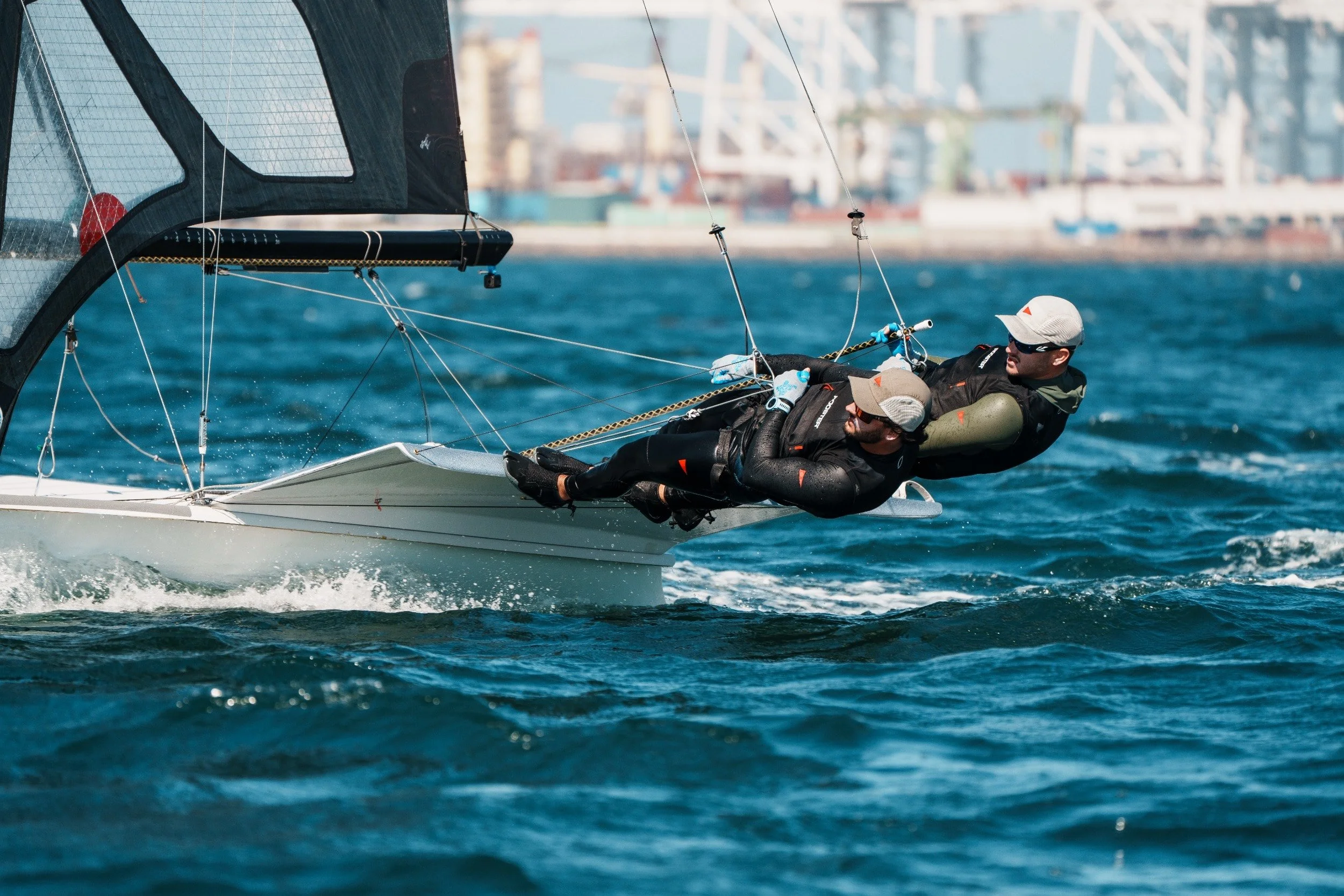
The conditions were brutal—sustained 25+ knot winds, cold temperatures, and only six qualifying races completed out of nine scheduled. Half of those races were right at the wind limit of the class. We capsized in two of those high-wind races, which cost us dearly in the standings. It was frustrating. It was humbling. And it was exactly what we needed.
Learning How to Lose
Here's something that's become clear to us: when you're campaigning in an Olympic class where the competition includes SailGP athletes and America's Cup sailors, you're going to spend a lot of time losing. The question isn't whether you'll face setbacks—it's how you respond to them.
At this regatta, we chose not to let the results define us. As Jordan put it during our debrief: "The only thing we could have done worse at this regatta was get negative or dark about it. It was literally the only thing that could have made things worse, so we chose not to."
Our coach Willie noticed something different about us at this event. He said we've "learned how to lose"—not in the sense that we've lost our hunger or motivation, but that we've stopped letting frustration sabotage our performance and our learning.
Speed Breakthroughs in the Toughest Conditions
Here's where it gets exciting. Despite the overall result, we had some genuine breakthroughs:
Heavy air boat speed: On one race day, it was so windy we couldn't even sail upwind before the start to check our setup. We had to race blind in 25 knots—and the highlight reel from the media team that day was a video of us matching speed with the Dutch team that finished third overall.
On-the-fly adjustments: We've developed a new ability to diagnose and fix speed issues while racing, something that hurt us badly at Palma earlier this year.
Port tack starts: We committed to practicing this skill that the top teams use regularly. Three of our four port starts were rough, but the last race of the regatta? We crushed it—applying the lessons that we had discussed earlier in the event and breaking through the middle of the fleet beautifully.
The Bigger Picture
We're in Year Two of our four-year campaign to qualify for the 2028 Olympics. Year One was boat handling. Year Two—where we are now—is boat speed. Year Three will be about tying everything together, and Year Four is when we peak.
This result doesn't tell the whole story. We're building something systematic and disciplined, and sometimes that means accepting short-term setbacks for long-term gains. The American 49er fleet is stacked with talented teams who have a head start on us. To have a real shot at qualifying, we essentially need to be medal contenders. As a result we've built our campaign in a slightly different way than most teams, and we think that the results will start to show in year three.
We'll head back to training with a clear focus: more time in the 20-30 knot range, more high-wind gybes, more preparation for conditions where other teams might not even be able to finish. We're not discouraged—we're motivated.
The work continues.
Finding Silver Linings in Heavy Air
We just returned from the 49er World Championship in France, and we'll be honest with you: it was our worst result ever in the 49er. Our first time in Bronze Fleet. But before you feel too bad for us, we want to share why this regatta might actually be one of the most important of our campaign so far.
The conditions were brutal—sustained 25+ knot winds, cold temperatures, and only six qualifying races completed out of nine scheduled. Half of those races were right at the wind limit of the class. We capsized in two of those high-wind races, which cost us dearly in the standings. It was frustrating. It was humbling. And it was exactly what we needed.
Learning How to Lose
Here's something that's become clear to us: when you're campaigning in an Olympic class where the competition includes SailGP athletes and America's Cup sailors, you're going to spend a lot of time losing. The question isn't whether you'll face setbacks—it's how you respond to them.
At this regatta, we chose not to let the results define us. As Jordan put it during our debrief: "The only thing we could have done worse at this regatta was get negative or dark about it. It was literally the only thing that could have made things worse, so we chose not to."
Our coach Willie noticed something different about us at this event. He said we've "learned how to lose"—not in the sense that we've lost our hunger or motivation, but that we've stopped letting frustration sabotage our performance and our learning.
Speed Breakthroughs in the Toughest Conditions
Here's where it gets exciting. Despite the overall result, we had some genuine breakthroughs:
Heavy air boat speed: On one race day, it was so windy we couldn't even sail upwind before the start to check our setup. We had to race blind in 25 knots—and the highlight reel from the media team that day was a video of us matching speed with the Dutch team that finished third overall.
On-the-fly adjustments: We've developed a new ability to diagnose and fix speed issues while racing, something that hurt us badly at Palma earlier this year.
Port tack starts: We committed to practicing this skill that the top teams use regularly. Three of our four port starts were rough, but the last race of the regatta? We crushed it—applying the lessons that we had discussed earlier in the event and breaking through the middle of the fleet beautifully.
The Bigger Picture
We're in Year Two of our four-year campaign to qualify for the 2028 Olympics. Year One was boat handling. Year Two—where we are now—is boat speed. Year Three will be about tying everything together, and Year Four is when we peak.
This result doesn't tell the whole story. We're building something systematic and disciplined, and sometimes that means accepting short-term setbacks for long-term gains. The American 49er fleet is stacked with talented teams who have a head start on us. To have a real shot at qualifying, we essentially need to be medal contenders. As a result we've built our campaign in a slightly different way than most teams, and we think that the results will start to show in year three.
We'll head back to training with a clear focus: more time in the 20-30 knot range, more high-wind gybes, more preparation for conditions where other teams might not even be able to finish. We're not discouraged—we're motivated.
The work continues.