Year 3 Begins: More Racing, More Classes, More Pressure
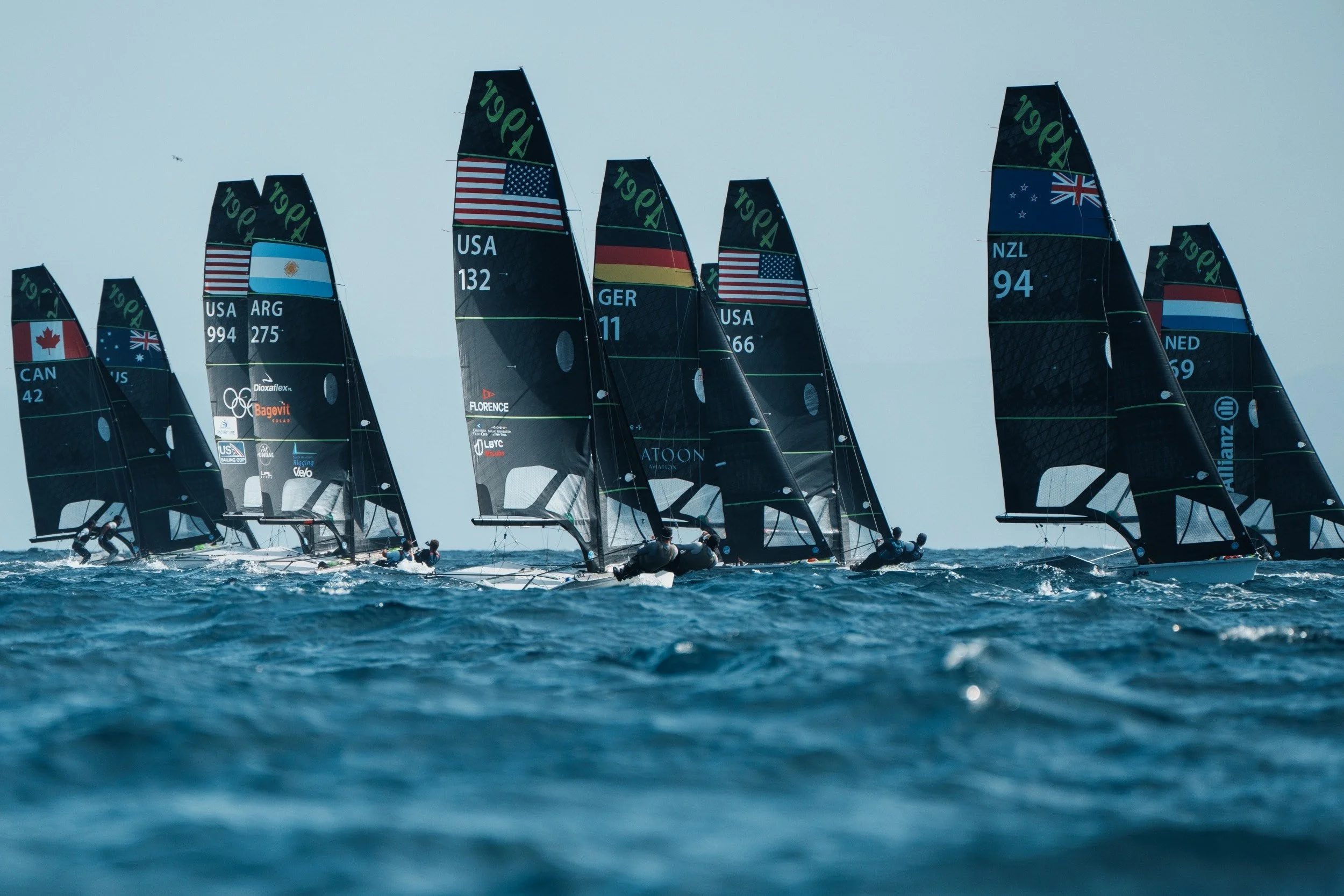
We are entering Year 3 of our Olympic campaign with a simple priority: race more.
The first two years built the platform. Year 1 centered on learning the 49er and developing reliable boat handling. Year 2 began the harder process of converting those foundations into speed and the tools to consistently play the game. Year 3 will increase the volume and variety of race course decision making by putting us on more racecourses, more often, and in multiple classes.
The first example came last weekend in Harbor Springs, Michigan, where we joined Anthony Kotoun’s Wah-gwan for the 2026 Melges 24 Pre-Worlds. Sailing with Kotoun, America’s Cup sailor Riley Gibbs, and TP52 bow woman Franny Schulte, Jordan and Grant helped the team finish third after making steady improvements through the week of training.
The 15 boat fleet was a good measuring stick, but more importantly it provided the ideal environment for the team to focus on the process of getting in sync with each other and checking off some little details that will make a difference when the real racing starts.
From Building Speed to Using It
For much of the campaign, our development has been organized around one central question: how do we sail the 49er better across a wider range of conditions?
That work demanded long training blocks, repeated lineups, deliberate setup changes, and close attention to technique. It built a more dependable platform and a clearer understanding of the boat. But speed development and race development are not the same thing. A fast boat still has to start in traffic, hold a lane, recognize the course, manage risk, communicate under pressure, and execute every maneuver around other teams. Our coach and mentor, Dave Ullman likes to say:
"Sailing is not a thinking game, it is a reaction game."
The correct reactions can only be trained through repetition. Year 3 is designed to maximize reps on the race course.
With only 8 49er regattas on the class calendar each year, we'll be jumping into other classes to increase the race course reps. Racing in other classes does not replace the 49er campaign, but it strengthens it. Each boat changes the timing and the responsibilities, but the underlying competitive problems remain: build a plan, get off the line, anticipate the fleet, communicate clearly, and turn small gains into good races, and good races into a consistent series.
The Melges 24 is an especially useful classroom. The boat rewards precise crew coordination and punishes hesitation. Five people must arrive at the same decision quickly, then execute it together. Starts are crowded, mark roundings compress the fleet, and gains can disappear in a single transition. For two sailors whose daily Olympic work happens in a doublehanded skiff, stepping into a larger team creates a different kind of awareness and accountability.
A Deep Team for a Serious Test
Kotoun put the Wah-gwan program together with a crew that combines world-class experience and young high-performance talent. Gibbs - filling in for regular tactician Stu McNay this week - was recently selected for ARC Team USA’s campaign for the 38th America’s Cup. Schulte brings experience from the TP52 fleet and one of the most demanding positions on a grand-prix race boat. Stu McNay has already won the Melges 24 Worlds as a helm, and has five Olympic appearances to his name. Anthony himself has multiple world titles across the Melges 32 and other classes and currently runs an international supermaxi program. Kotoun has already established Wah-gwan as a contender, including a podium at the 2025 U.S. Nationals and sixth at the 2024 Melges 24 World Championship in San Francisco.
That made the Pre-Worlds more than an opportunity to collect races. It placed Jordan and Grant inside a group with a high standard for preparation, communication, and execution. The third-place finish showed the team could compete near the front while still finding meaningful improvements from one race to the next.
The timing also made Harbor Springs valuable. The Pre-Worlds were held on the same Little Traverse Bay waters that will host the Melges 24 World Championship from September 19–26. The International Melges 24 Class has described the regatta as the final dress rehearsal before one of the most difficult titles in one-design sailing—a championship that requires speed, teamwork, meticulous boat handling, and consistency across a deep international fleet.
For the World Championship, five-time Olympian Stu McNay is scheduled to join Kotoun, Jordan, Grant, and Schulte aboard Wahgwan. McNay brings another layer of championship experience: he is a 470 European champion, a 505 world champion, and a previous member of a Melges 24 world-title-winning team.
The Training Partner Matters
The weekend was also built around collaboration. Wah-gwan worked with a training partner led by coach Dave Ullman and owner Geoff Fargo, alongside Patrick Wilson, Jackson Benvenutti, Haydon Stapleton, and Janov Racing’s 49er coach, Willie McBride.
That group connected several chapters of the Janovs’ development. Grant, McBride, Benvenutti, Stapleton, and Fargo won the 2024 Melges 24 U.S. National Championship together on Sentinel, securing the title before the final race after winning five races in the nine-race series. Wilson had previously raced with the brothers during their J/70 campaign. Ullman, who is also a mentor in the 49er campaign, brings decades of championship-level coaching and sailmaking knowledge to the two-boat process.
Those relationships are part of the purpose of multi-class racing. The goal is not simply to add events to a calendar. It is to place Jordan and Grant in strong teams, around experienced sailors, where every day offers another way to see a racecourse and another standard against which to measure themselves.
More Racecourse, More Responsibility
Year 3 will ask the brothers to carry lessons in both directions.
The speed, movement, and rapid communication developed in the 49er can contribute to teams in the Melges 24 and other classes. At the same time, the fleet management, role clarity, tactical patience, and compressed decision-making of keelboat racing can return to the Olympic boat.
That exchange is already visible. A week like the Pre-Worlds gives the sailors more than a finishing place. It gives them starts to review, mark roundings to debrief, communication patterns to refine, and examples of how top professionals prepare for a championship.
Third in Harbor Springs is a strong opening marker. The larger objective is to become a team that learns faster because it races more: across conditions, across roles, and across classes.
The first two years helped Janov Racing build the tools. Year 3 is about putting those tools under pressure as often as possible.
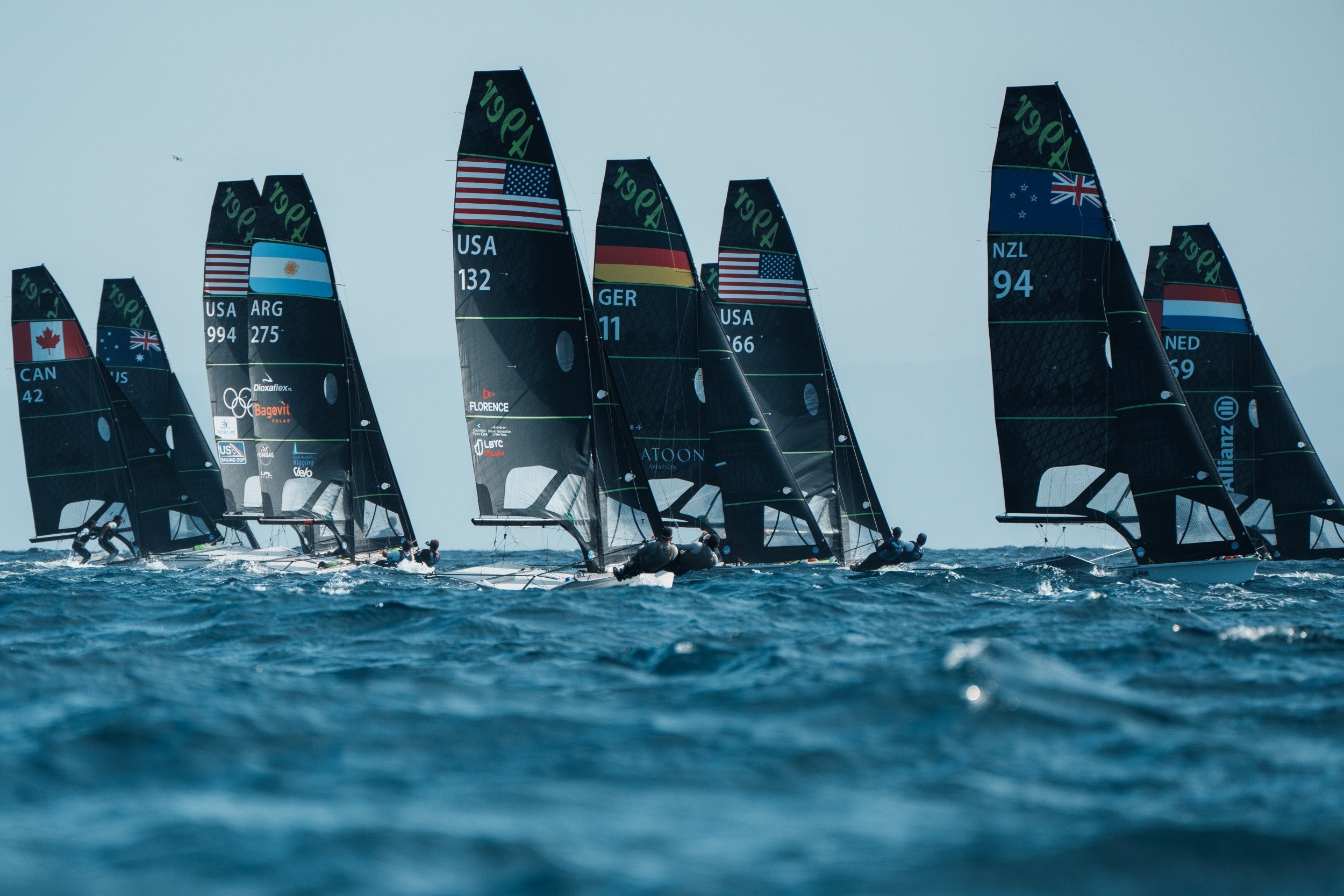
We are entering Year 3 of our Olympic campaign with a simple priority: race more.
The first two years built the platform. Year 1 centered on learning the 49er and developing reliable boat handling. Year 2 began the harder process of converting those foundations into speed and the tools to consistently play the game. Year 3 will increase the volume and variety of race course decision making by putting us on more racecourses, more often, and in multiple classes.
The first example came last weekend in Harbor Springs, Michigan, where we joined Anthony Kotoun’s Wah-gwan for the 2026 Melges 24 Pre-Worlds. Sailing with Kotoun, America’s Cup sailor Riley Gibbs, and TP52 bow woman Franny Schulte, Jordan and Grant helped the team finish third after making steady improvements through the week of training.
The 15 boat fleet was a good measuring stick, but more importantly it provided the ideal environment for the team to focus on the process of getting in sync with each other and checking off some little details that will make a difference when the real racing starts.
From Building Speed to Using It
For much of the campaign, our development has been organized around one central question: how do we sail the 49er better across a wider range of conditions?
That work demanded long training blocks, repeated lineups, deliberate setup changes, and close attention to technique. It built a more dependable platform and a clearer understanding of the boat. But speed development and race development are not the same thing. A fast boat still has to start in traffic, hold a lane, recognize the course, manage risk, communicate under pressure, and execute every maneuver around other teams. Our coach and mentor, Dave Ullman likes to say:
"Sailing is not a thinking game, it is a reaction game."
The correct reactions can only be trained through repetition. Year 3 is designed to maximize reps on the race course.
With only 8 49er regattas on the class calendar each year, we'll be jumping into other classes to increase the race course reps. Racing in other classes does not replace the 49er campaign, but it strengthens it. Each boat changes the timing and the responsibilities, but the underlying competitive problems remain: build a plan, get off the line, anticipate the fleet, communicate clearly, and turn small gains into good races, and good races into a consistent series.
The Melges 24 is an especially useful classroom. The boat rewards precise crew coordination and punishes hesitation. Five people must arrive at the same decision quickly, then execute it together. Starts are crowded, mark roundings compress the fleet, and gains can disappear in a single transition. For two sailors whose daily Olympic work happens in a doublehanded skiff, stepping into a larger team creates a different kind of awareness and accountability.
A Deep Team for a Serious Test
Kotoun put the Wah-gwan program together with a crew that combines world-class experience and young high-performance talent. Gibbs - filling in for regular tactician Stu McNay this week - was recently selected for ARC Team USA’s campaign for the 38th America’s Cup. Schulte brings experience from the TP52 fleet and one of the most demanding positions on a grand-prix race boat. Stu McNay has already won the Melges 24 Worlds as a helm, and has five Olympic appearances to his name. Anthony himself has multiple world titles across the Melges 32 and other classes and currently runs an international supermaxi program. Kotoun has already established Wah-gwan as a contender, including a podium at the 2025 U.S. Nationals and sixth at the 2024 Melges 24 World Championship in San Francisco.
That made the Pre-Worlds more than an opportunity to collect races. It placed Jordan and Grant inside a group with a high standard for preparation, communication, and execution. The third-place finish showed the team could compete near the front while still finding meaningful improvements from one race to the next.
The timing also made Harbor Springs valuable. The Pre-Worlds were held on the same Little Traverse Bay waters that will host the Melges 24 World Championship from September 19–26. The International Melges 24 Class has described the regatta as the final dress rehearsal before one of the most difficult titles in one-design sailing—a championship that requires speed, teamwork, meticulous boat handling, and consistency across a deep international fleet.
For the World Championship, five-time Olympian Stu McNay is scheduled to join Kotoun, Jordan, Grant, and Schulte aboard Wahgwan. McNay brings another layer of championship experience: he is a 470 European champion, a 505 world champion, and a previous member of a Melges 24 world-title-winning team.
The Training Partner Matters
The weekend was also built around collaboration. Wah-gwan worked with a training partner led by coach Dave Ullman and owner Geoff Fargo, alongside Patrick Wilson, Jackson Benvenutti, Haydon Stapleton, and Janov Racing’s 49er coach, Willie McBride.
That group connected several chapters of the Janovs’ development. Grant, McBride, Benvenutti, Stapleton, and Fargo won the 2024 Melges 24 U.S. National Championship together on Sentinel, securing the title before the final race after winning five races in the nine-race series. Wilson had previously raced with the brothers during their J/70 campaign. Ullman, who is also a mentor in the 49er campaign, brings decades of championship-level coaching and sailmaking knowledge to the two-boat process.
Those relationships are part of the purpose of multi-class racing. The goal is not simply to add events to a calendar. It is to place Jordan and Grant in strong teams, around experienced sailors, where every day offers another way to see a racecourse and another standard against which to measure themselves.
More Racecourse, More Responsibility
Year 3 will ask the brothers to carry lessons in both directions.
The speed, movement, and rapid communication developed in the 49er can contribute to teams in the Melges 24 and other classes. At the same time, the fleet management, role clarity, tactical patience, and compressed decision-making of keelboat racing can return to the Olympic boat.
That exchange is already visible. A week like the Pre-Worlds gives the sailors more than a finishing place. It gives them starts to review, mark roundings to debrief, communication patterns to refine, and examples of how top professionals prepare for a championship.
Third in Harbor Springs is a strong opening marker. The larger objective is to become a team that learns faster because it races more: across conditions, across roles, and across classes.
The first two years helped Janov Racing build the tools. Year 3 is about putting those tools under pressure as often as possible.