Your Role Is As Big As You Make It
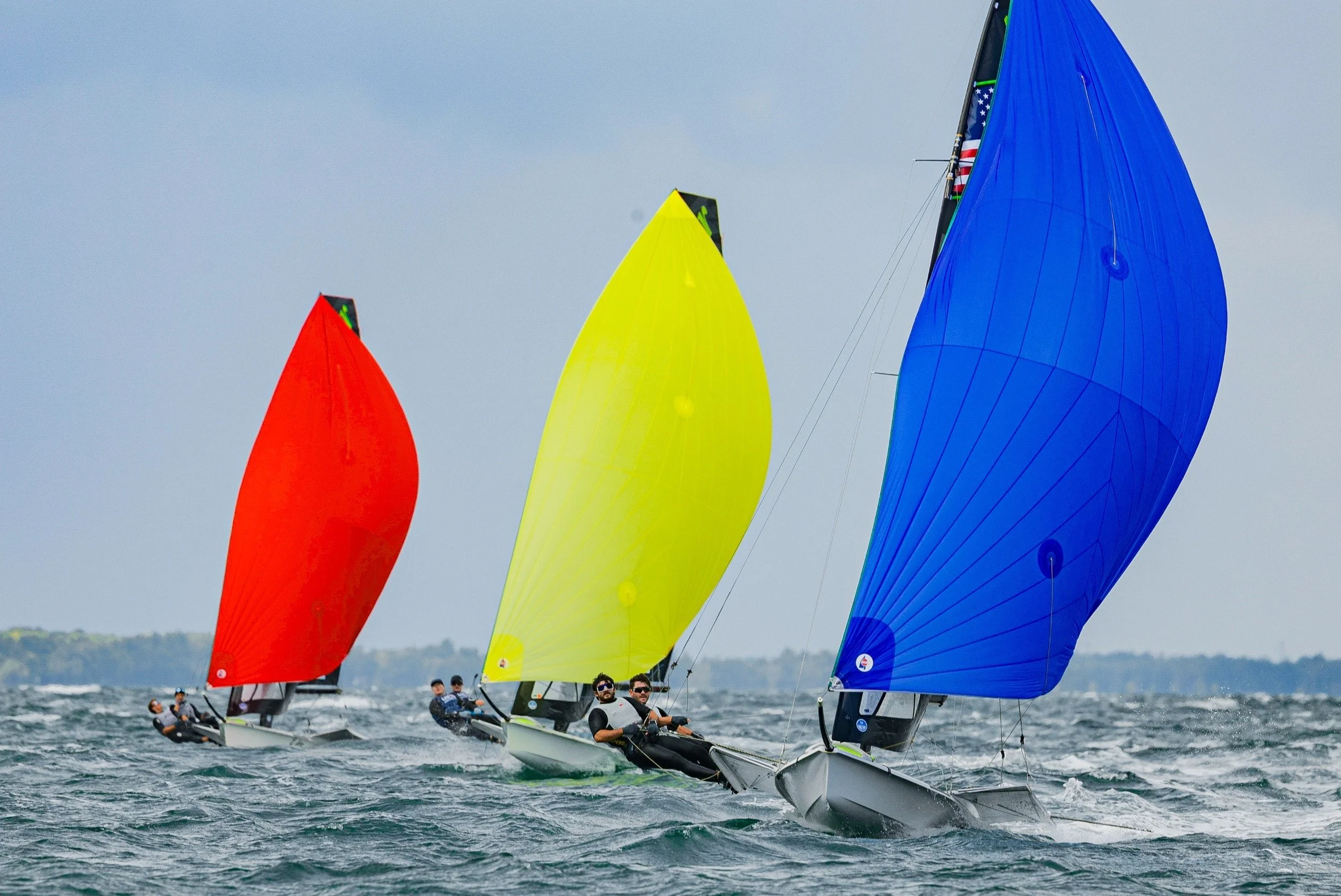
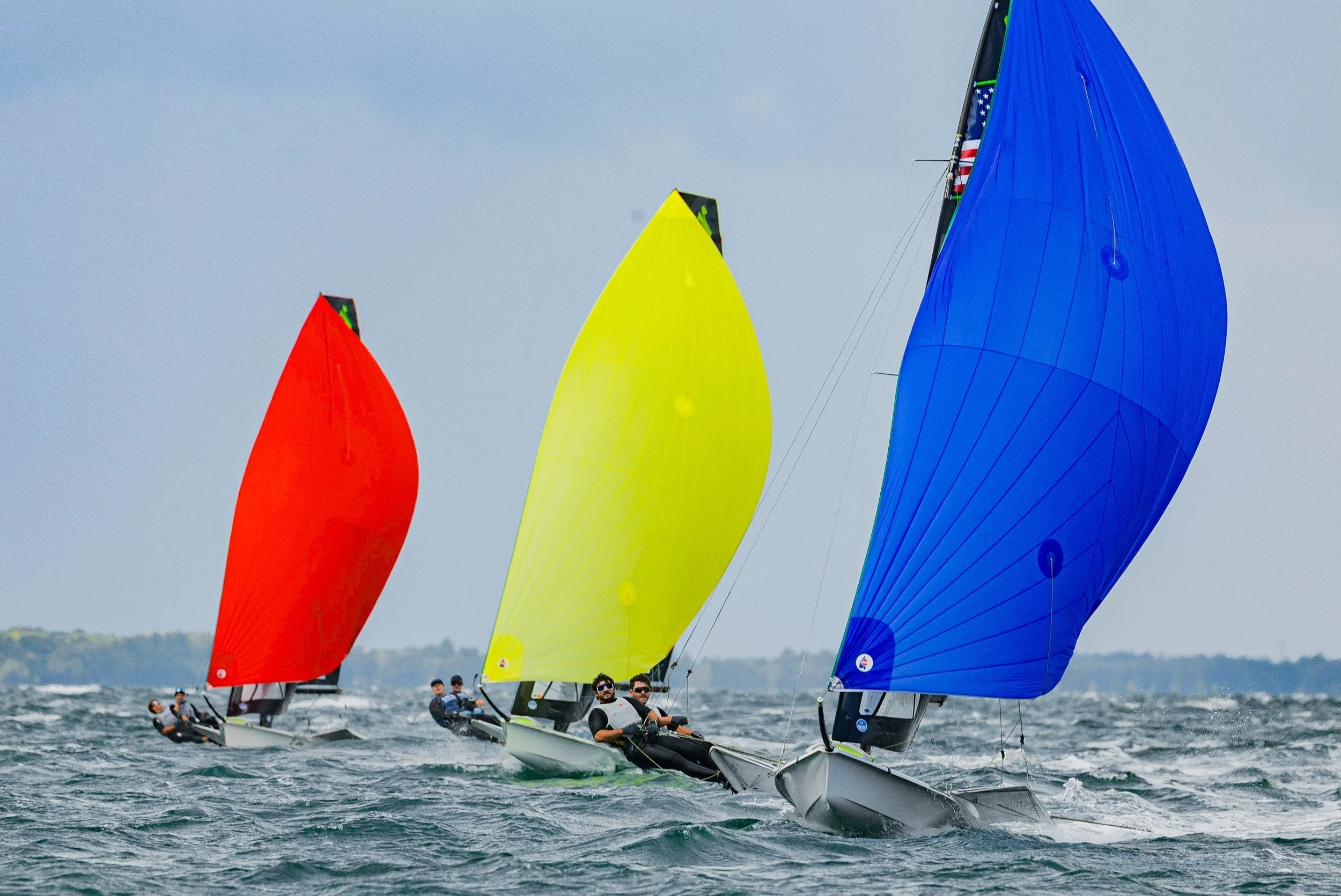
In the 49er, Jordan drives and calls tactics. Grant trims and manages boatspeed. The roles are clear—but that clarity doesn't mean the job description is where contribution ends.
After a packed May that included J/70 racing in Ventura, and Santa Barbara, the Helly Hansen Sailing World Regatta in Annapolis, and the 49er Worlds in Hyères, the brothers returned to Long Beach with a fresh perspective on what it means to be a valuable crew member—regardless of where you're standing on the boat.
Bow Position, Big Voice
At the Sailing World Regatta, Jordan did bow for Progress—a J/70 program run by Paul Green, with Olympian Stu McNay, and Ron Weed onboard. It was Jordan's first time in many years doing bow on a J/70, and his first time sailing with any of the team.
"By the end of the regatta, I felt like I was more of a strategist than anything. Yeah, I was getting the kite up and down and helping trim the jib and prepping the boat every morning. But it was really quite good to be giving tactical input on all the beats, and providing wind observations, and fleet observations."
The experience crystallized something important:
"It really taught me a lesson on how your role is as big as you make it. Even if you're doing the bow, or you're rail meat, quote-unquote—in the right context, you can contribute a lot to the team, and more than you were expected."
Observations vs. Advice
The distinction matters. On a boat where the tactician makes the final call, unsolicited advice can create friction. But objective observations—delivered without opinion—help the decision-maker see what they might otherwise miss.
"I think it's really important to give input that is not opinionated, and very objective. Stating things like, 'Hey, Stu, we have a lot of boats on the starboard layline, port layline's gonna be tight getting into it,' or 'Seeing good pressure on the right side.' Eventually, you build enough trust to where the tactician knows that you're not trying to make the decisions—you're just trying to paint a clear picture for him."
That trust doesn't happen instantly. It builds as the crew sees that your input serves the team, not your ego.
"The main thing is just building the trust that you're not trying to make the calls—you're just trying to help the tactician have a less skewed view on what's going on in the course, and more realistic."
Creating Space for Input
Of course, responsibility runs both ways. Tacticians and drivers can actively create the environment where good observations flow freely. Jordan has found that asking questions—rather than waiting for input—yields better information and gets the whole crew engaged.
"One of my favorite things to do is ask them before a start—most people on the boat—what side do you see more pressure on? Not only does it help me, because I get a second perspective... but it also gets the rest of the boat dialed into the race."
When the whole crew has been asked for input, they understand the plan. There's no confusion about why a tack is happening or which gate you're choosing—because they helped build the picture.
"When you ask them instead of waiting for them to tell you, there's usually less opinion behind it and less friction—and more just willing to help and provide input and observations instead of providing advice."
Staying in Sync
Grant, who typically trims main, focuses on keeping the boat fast and the driver informed. He watches the compass so the tactician doesn't have to, and uses simple scales to stay calibrated with the helm.
"I'm paying attention to that, and that'll take a little bit of the load off of someone like Jordan. I'm just trying to make sure that we're always talking to each other back and forth, so that we never get out of sync—because it often takes a little while to get back into the groove, if you will."
Lessons for Your Boat
Give observations, not advice. Share what you see—pressure, traffic, angles—without telling the tactician what to do with it.
Be objective. The more factual your input, the more useful it is. Leave opinion out until you're asked.
Build trust gradually. Especially on a new team, start with small, helpful observations. Trust compounds.
If you're the tactician, ask questions. Prompt your crew for input before the start. You'll get better information, and they'll be more invested in the plan.
Offload what you can. If you're next to the driver or the tactician, take something off their plate—compass numbers, layline calls, pressure updates. Let them focus on decision-making.
Stay in dialogue. Constant, low-friction communication keeps the boat in sync. Silence leads to drift.
Your position on the boat sets your responsibilities—but not your ceiling. The crew who observe clearly, communicate usefully, and help the team make better decisions will always outperform their job title.
In the 49er, Jordan drives and calls tactics. Grant trims and manages boatspeed. The roles are clear—but that clarity doesn't mean the job description is where contribution ends.
After a packed May that included J/70 racing in Ventura, and Santa Barbara, the Helly Hansen Sailing World Regatta in Annapolis, and the 49er Worlds in Hyères, the brothers returned to Long Beach with a fresh perspective on what it means to be a valuable crew member—regardless of where you're standing on the boat.
Bow Position, Big Voice
At the Sailing World Regatta, Jordan did bow for Progress—a J/70 program run by Paul Green, with Olympian Stu McNay, and Ron Weed onboard. It was Jordan's first time in many years doing bow on a J/70, and his first time sailing with any of the team.
"By the end of the regatta, I felt like I was more of a strategist than anything. Yeah, I was getting the kite up and down and helping trim the jib and prepping the boat every morning. But it was really quite good to be giving tactical input on all the beats, and providing wind observations, and fleet observations."
The experience crystallized something important:
"It really taught me a lesson on how your role is as big as you make it. Even if you're doing the bow, or you're rail meat, quote-unquote—in the right context, you can contribute a lot to the team, and more than you were expected."
Observations vs. Advice
The distinction matters. On a boat where the tactician makes the final call, unsolicited advice can create friction. But objective observations—delivered without opinion—help the decision-maker see what they might otherwise miss.
"I think it's really important to give input that is not opinionated, and very objective. Stating things like, 'Hey, Stu, we have a lot of boats on the starboard layline, port layline's gonna be tight getting into it,' or 'Seeing good pressure on the right side.' Eventually, you build enough trust to where the tactician knows that you're not trying to make the decisions—you're just trying to paint a clear picture for him."
That trust doesn't happen instantly. It builds as the crew sees that your input serves the team, not your ego.
"The main thing is just building the trust that you're not trying to make the calls—you're just trying to help the tactician have a less skewed view on what's going on in the course, and more realistic."
Creating Space for Input
Of course, responsibility runs both ways. Tacticians and drivers can actively create the environment where good observations flow freely. Jordan has found that asking questions—rather than waiting for input—yields better information and gets the whole crew engaged.
"One of my favorite things to do is ask them before a start—most people on the boat—what side do you see more pressure on? Not only does it help me, because I get a second perspective... but it also gets the rest of the boat dialed into the race."
When the whole crew has been asked for input, they understand the plan. There's no confusion about why a tack is happening or which gate you're choosing—because they helped build the picture.
"When you ask them instead of waiting for them to tell you, there's usually less opinion behind it and less friction—and more just willing to help and provide input and observations instead of providing advice."
Staying in Sync
Grant, who typically trims main, focuses on keeping the boat fast and the driver informed. He watches the compass so the tactician doesn't have to, and uses simple scales to stay calibrated with the helm.
"I'm paying attention to that, and that'll take a little bit of the load off of someone like Jordan. I'm just trying to make sure that we're always talking to each other back and forth, so that we never get out of sync—because it often takes a little while to get back into the groove, if you will."
Lessons for Your Boat
Give observations, not advice. Share what you see—pressure, traffic, angles—without telling the tactician what to do with it.
Be objective. The more factual your input, the more useful it is. Leave opinion out until you're asked.
Build trust gradually. Especially on a new team, start with small, helpful observations. Trust compounds.
If you're the tactician, ask questions. Prompt your crew for input before the start. You'll get better information, and they'll be more invested in the plan.
Offload what you can. If you're next to the driver or the tactician, take something off their plate—compass numbers, layline calls, pressure updates. Let them focus on decision-making.
Stay in dialogue. Constant, low-friction communication keeps the boat in sync. Silence leads to drift.
Your position on the boat sets your responsibilities—but not your ceiling. The crew who observe clearly, communicate usefully, and help the team make better decisions will always outperform their job title.